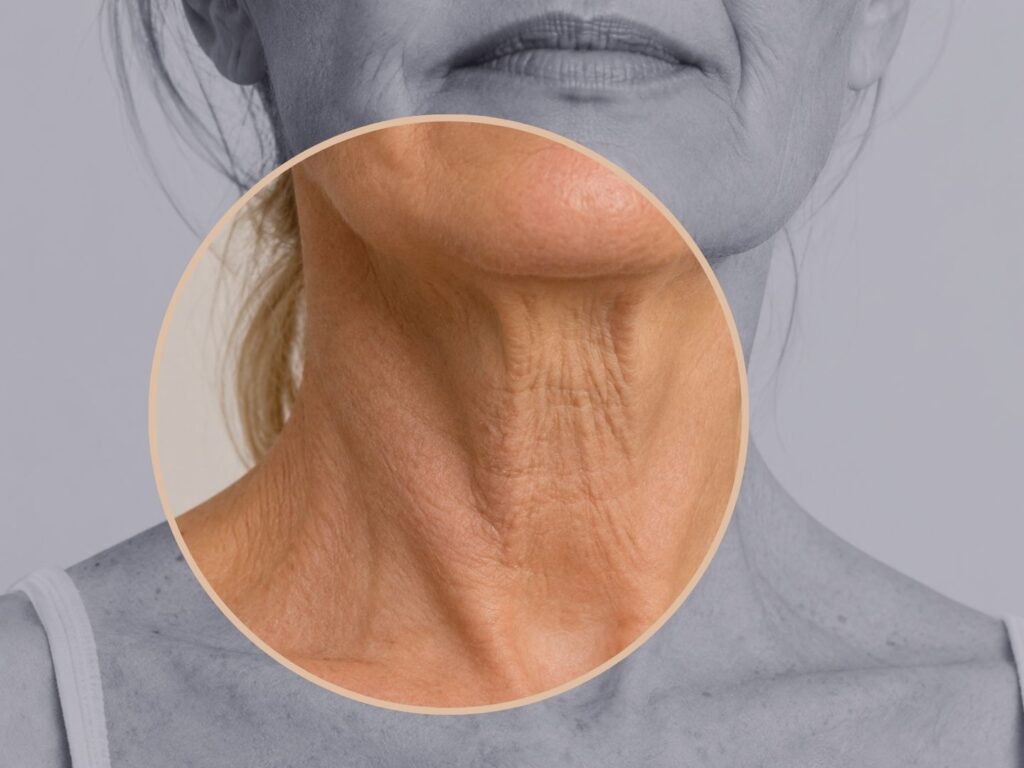
Why the neck develops a crepey appearance
Several things happen together as we age, and it’s rarely just one factor:
Collagen and elastin decline. From our mid-twenties onwards, we produce less collagen every year. The neck’s skin is thinner than facial skin to begin with, so this loss shows up sooner and more visibly here.
Volume loss. As we lose fat and the platysma muscle weakens, the skin loses its underlying support and starts to fold rather than sit smoothly.
Sun damage. UV exposure breaks down collagen and elastin over decades. Because the neck often gets missed in daily sunscreen application, this damage tends to be more advanced here than on the face.
Repetitive movement. Looking down at phones and laptops for hours a day (sometimes called “tech neck”) encourages horizontal lines to form and deepen over time.
Genetics and skin type. Some people are simply more prone to crepey skin than others, regardless of how well they’ve looked after themselves.
None of this is about neglect or vanity. It’s biology, and it responds well to the right treatment approach.




 4.9/5


