


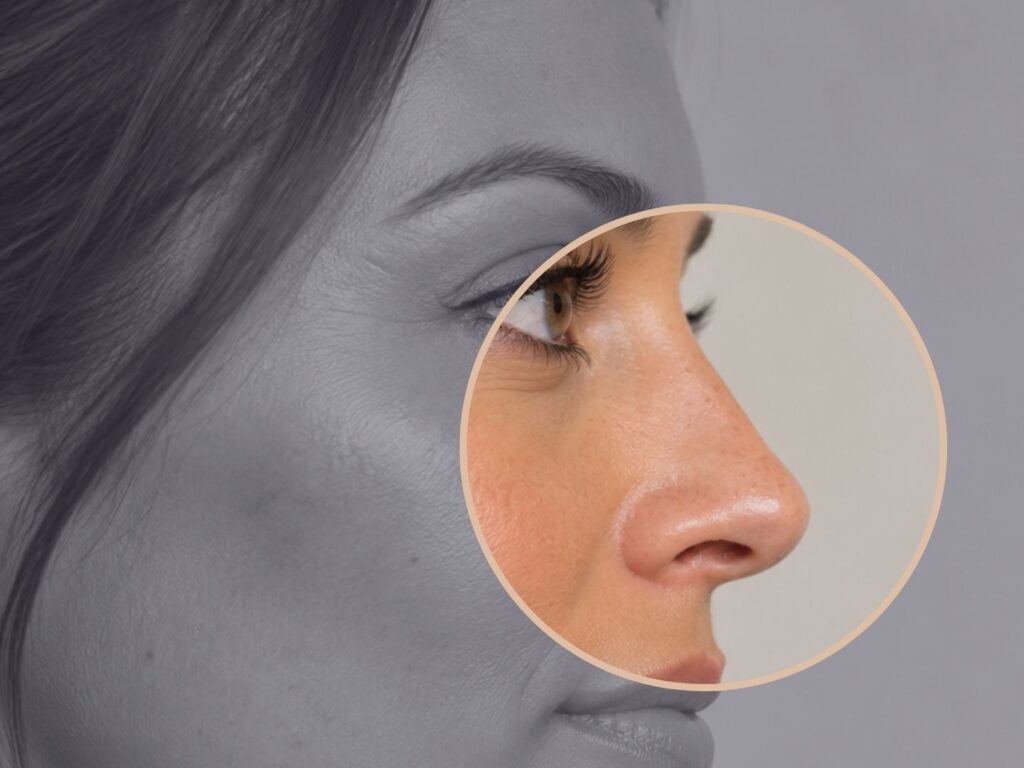

Non-Surgical Rhinoplasty (Nose Reshaping)
The nose sits right in the centre of the face, so even a small irregularity draws the eye far more than most people expect. A bump on the bridge, a tip that droops, or a slight asymmetry from an old break can dominate how someone feels about their whole appearance, even when everyone else barely notices it. In my clinic, nose concerns come up in consultations for cheeks, jawlines, everything, far more often than patients initially book in for.
The good news is that most of these concerns can now be addressed without surgery, often in a single fifteen minute appointment.

 4.9/5
Based on 300 reviews

We are regulated by the
Care Quality Commission
Our products are exclusively from trusted brands


Jump to:
JUMP TO
What causes an unbalanced nose?
Every nose I see has its own story. Some are simply built that way: a naturally low bridge, a slightly bulbous tip, or an asymmetry that has been there since the teenage years. Others are the result of an old rugby injury, a childhood fall, or a previous surgical rhinoplasty that did not quite settle evenly.
Common concerns I treat include:
- A dorsal hump or visible bump on the bridge
- A flat or low bridge that lacks definition
- A drooping or downturned tip
- Asymmetry, often from a previous injury
- Depressions or unevenness along the length of the nose
- Nostril flaring on smiling or speaking
Whatever the cause, the underlying question is usually the same: can the profile be brought into better balance without going anywhere near a surgeon’s table? In the majority of cases seeking cosmetic refinement rather than functional correction, the answer is yes.
Our Consultations
Our consultations are in-depth and tailored to you, creating a bespoke treatment plan catering to all of your concerns.
ConsultationTreatments
How non-surgical nose reshaping works
I use dermal filler, placed with a fine needle or cannula, to build up specific areas of the nose and create a straighter, more balanced profile. Filling in a dip in front of a bump, for instance, can visually cancel out the bump entirely without touching it. Raising the area at the top of the tip can lift a droop. It sounds almost too simple, and I understand why patients are sceptical the first time I explain it, but the change in profile from front and side view can be striking.
I work with Teoxane and Revanesse fillers for this treatment. Both are well studied, predictable in how they behave under the skin, and give me the control I need for a treatment where a millimetre genuinely matters.
For a drooping tip, I often combine filler with a small amount of anti-wrinkle injection into the muscle that pulls the tip downward when you smile, giving a subtle lift. For flared nostrils, anti-wrinkle injection alone can soften the flare and make the nose appear narrower.
None of this changes the bone or cartilage. It is a skilled redistribution of volume that tricks the eye into reading the nose as straighter, and done well, it is genuinely difficult to tell filler has been used at all.
Is it right for you?
Non-surgical nose reshaping suits people looking to smooth a bump, correct mild asymmetry, or refine the tip. It is not a substitute for surgical rhinoplasty if you want to reduce the overall size of the nose, narrow the bones, or correct a breathing problem. I am always honest about this at consultation. If surgery is genuinely what someone needs, I will say so rather than offer a filler as a workaround, because an over-filled nose looking worse than the original is one of the more avoidable disappointments in this field.
I would also add, and this is a personal view rather than official guidance, that the person holding the needle matters more here than almost any other injectable treatment. The nose has a limited blood supply and the margin for error is small. This is precisely where the UK’s light-touch regulation of the aesthetics industry worries me most. Anyone can currently do a weekend course and start injecting noses. I would urge anyone considering this treatment to check they are being treated by a doctor, dentist, or nurse prescriber with genuine experience in this specific area, not simply a general filler qualification.
What to expect
The appointment itself is quick, usually fifteen to twenty minutes. There will be some initial swelling and possibly minor bruising, though this tends to settle within a few days. You will see the change in shape immediately, and I always show patients a mirror before and after so they can judge the result for themselves rather than take my word for it.
The result generally lasts between twelve and eighteen months, depending on the product used and how quickly your body metabolises it.
Related Treatments