Fully Regulated by the Care Quality Commission
Rosacea

Rosacea

Rosacea is one of the most common conditions I see in clinic, and also one of the most misunderstood. Patients often arrive thinking they simply have sensitive skin, or that they are “always a bit flushed”, when what they actually have is a chronic inflammatory condition that, left untreated, tends to get worse rather than better.

It typically affects the cheeks, nose, chin and forehead. The visible signs are persistent redness, flushing, small thread veins, and in many patients, breakouts that look like acne but do not respond to acne treatments. In more advanced cases, particularly in men, the skin around the nose can thicken permanently, a condition called rhinophyma.

Globally, rosacea affects an estimated 45 million people, and I would say it is under-diagnosed rather than rare. It is not dangerous. But I have seen how much it can knock a patient’s confidence, particularly when people assume, wrongly, that the redness is due to drinking or poor hygiene. It isn’t. The earlier we treat it, the more we can prevent that long-term thickening of the skin.

4.9/5
Based on 292 reviews
Care Quality Commission
We are regulated by the Care Quality Commission
Rosacea
Our products are exclusively from trusted brands
BOTOX Cosmetic

Causes of Rosacea

We still do not know the exact cause, and I am always a little wary of clinics that claim otherwise. What we do know is that it is closely linked to excess sebum production and an impaired skin barrier, and a large proportion of my rosacea patients tell me they had acne when they were younger. There does seem to be a hereditary element too, so I always ask about family history.

Beyond that, most patients can identify their own triggers if they pay attention: alcohol, caffeine, spicy food, hot drinks, sun exposure, stress and vigorous exercise are the ones that come up again and again in consultations. I always tell patients that trigger avoidance alone will not fix rosacea, but knowing your own triggers makes a real difference to day-to-day flare-ups.

Our Consultations

Our consultations are in-depth and tailored to you, creating a bespoke treatment plan catering to all of your concerns.

Consultation

Treatments

Our consultations

Every rosacea consultation with me is thorough. Rosacea has several subtypes, and the right treatment plan depends entirely on which one you have and how far it has progressed, so I do not believe in a one-size-fits-all protocol here.

Treatment

My approach to rosacea has two strands: calming the skin from within, and treating the visible vascular damage directly. Doing only one or the other rarely gives a lasting result, in my experience.

Medical-grade skincare: ZO Skin Health

For the majority of patients, I start with a proper skincare overhaul using ZO Skin Health, in particular their Rozatrol range. It targets the skin barrier directly, helps normalise the skin cell cycle back down to a healthy four to six weeks, reduces inflammation and controls oil production. I often pair this with regular Hydrafacials incorporating Rozatrol, which patients tend to find both effective and genuinely relaxing.

Excel V+ laser for rosacea and thread veins

Skincare alone will not remove visible thread veins or persistent redness, which is where laser comes in. The Excel V+ laser targets the affected blood vessels directly, causing them to collapse. The body then reabsorbs them naturally over the following weeks, so the redness fades rather than being masked. This is, in my view, the single most effective treatment for the vascular side of rosacea, and it is the one I recommend most often.

Dermalux LED light therapy

After laser treatment, I usually recommend a course of Dermalux LED therapy. It supports the skin’s healing process, improves circulation and hydration, and helps calm any residual inflammation, so the skin recovers faster and more comfortably.

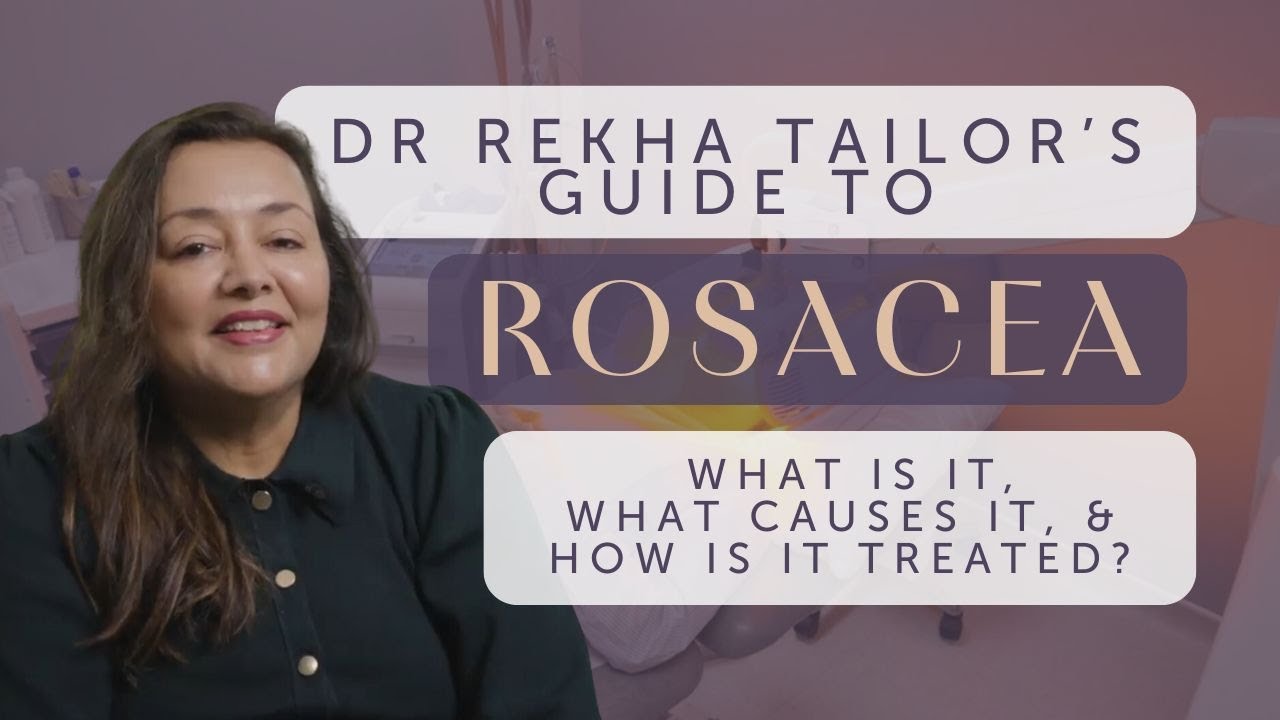
Dr Rekha Tailor's guide to Rosacea

What is it, what causes it and how is it treated

Helping you achieve outstanding, natural looking results.