What causes pigmentation?
In fair skin, sun exposure is, by far, the biggest driver. I’d go as far as to say that if I could give patients one piece of advice that would do more for their skin than any treatment in this clinic, it would be to wear SPF every single day, not just on holiday. In darker skin tones, pigmentation is more often linked to melasma or post-inflammatory hyperpigmentation, triggered by hormones, acne, psoriasis, burns, or any kind of trauma to the skin.
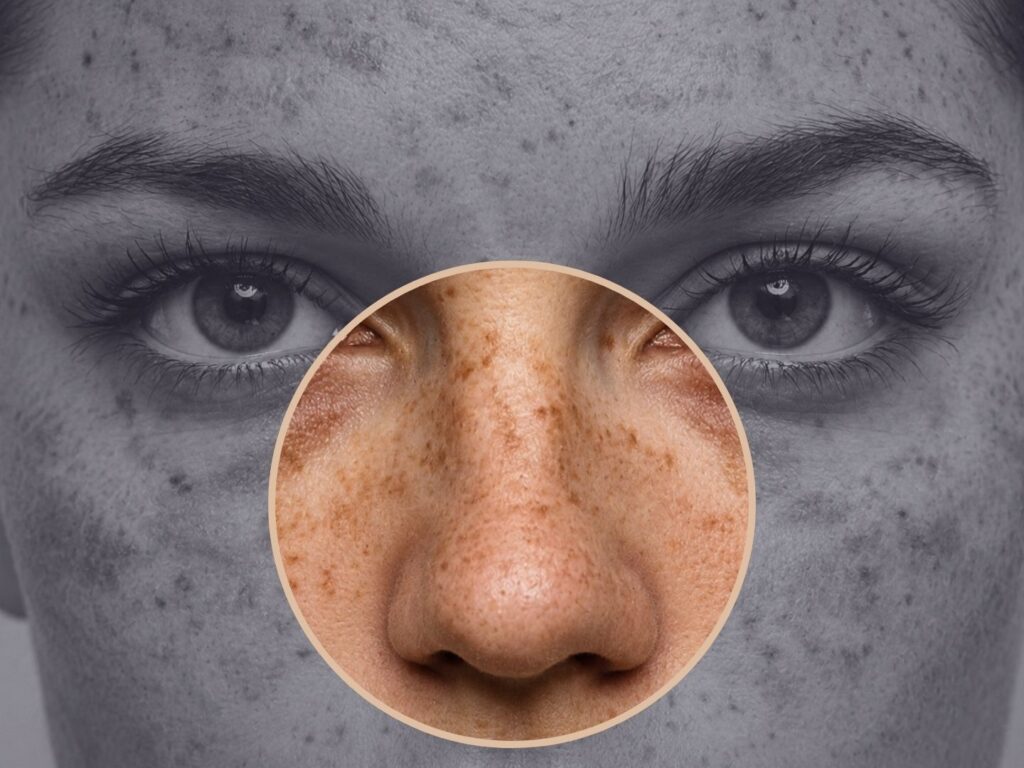
Here’s the mechanism, in plain terms: UV radiation, hormonal changes and inflammation all switch on melanocytes, the cells that produce melanin. When melanin is produced unevenly, you get freckles, sunspots or patchy discolouration. Freckles themselves are harmless, but they’re a visible marker of sun damage, and sun damage is what ages skin prematurely and raises the risk of skin cancer. I always tell patients: a freckle isn’t dangerous, but it’s a warning sign worth listening to.
The types of pigmentation I see most often
- Sun-induced pigmentation (sunspots, freckles, age spots) – superficial and closely tied to cumulative UV exposure over the years.
- Melasma – deeper, hormonally driven pigmentation, often triggered or worsened by pregnancy, contraception or HRT. This is the one patients find most frustrating, because it tends to relapse if it isn’t managed properly long term.
- Post-inflammatory hyperpigmentation – marks left behind after acne, eczema, injury or even overly aggressive treatments elsewhere. This is completely avoidable in most cases with the right aftercare.




 4.9/5


